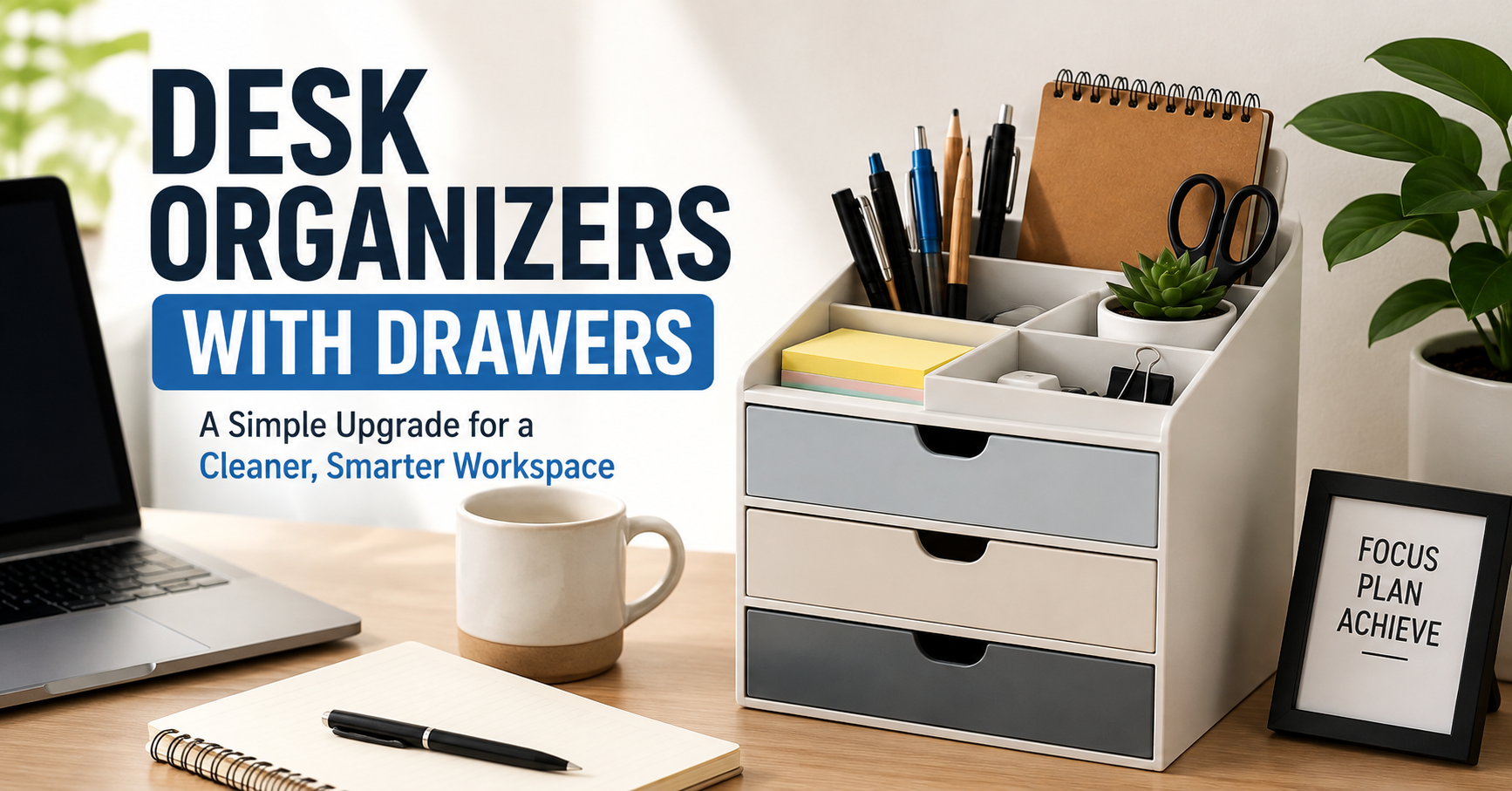
A few months ago, I reached a point where I couldn’t find a simple USB flash drive on my own desk. Sticky notes were buried under notebooks, charging cables kept tangling together, and pens somehow disappeared every other day. Every time I sat down to work, I spent the first five or ten minutes searching for something instead of actually getting started.
I tried stacking items into neat piles, but that only worked until the next busy day. What finally made a real difference wasn’t buying a bigger desk—it was adding a desk organizer with drawers.
It sounds like a small change, but having dedicated drawers for everyday items completely changed how my workspace felt. Instead of visual clutter everywhere, everything finally had a home.
If your desk constantly looks messy no matter how often you clean it, here’s what I’ve learned from using drawer organizers every day.
Why a Desk Organizer With Drawers Works Better Than Open Storage
Open organizers are great for items you use every few minutes, but they also leave everything visible. Over time, that visual clutter can make your workspace feel chaotic.
Drawers solve a different problem.
They hide the small items that usually create mess while still keeping them within easy reach.
Instead of seeing:
- Random paper clips
- Spare charging cables
- Flash drives
- Sticky notes
- Batteries
- Memory cards
- Receipts
…you simply open one drawer when needed.
It creates a cleaner workspace without making your supplies difficult to access.
My Biggest Mistake Before Buying One
At first, I assumed a desk organizer was just another storage box.
So I bought a cheap plastic tray with multiple compartments.
The problem?
Everything stayed exposed.
Dust collected quickly.
Small items still looked messy.
Eventually, those compartments became dumping grounds for random objects.
When I switched to a drawer organizer, I realized hidden storage makes a much bigger difference than I expected.
What Usually Ends Up Inside the Drawers?
One thing I appreciate most is giving every category its own space.
For example:
Top Drawer
Things I use several times each day:
- Pens
- Highlighters
- Sticky notes
- Small notebook
- USB flash drive
Everything is easy to grab without digging through a pile.
Middle Drawer
Items used occasionally:
- Charging cables
- USB adapters
- SD cards
- Earbuds
- Phone stand
These no longer sit scattered across the desk.
Bottom Drawer
Less frequently used supplies:
- Batteries
- Tape
- Spare mouse
- Cleaning cloth
- Extra notebooks
- Business cards
Keeping these out of sight makes the desk look much calmer.
How Drawer Organizers Improve Productivity
It sounds strange that storage could improve focus.
But it really does.
Before organizing my desk, I constantly interrupted myself.
I’d stop writing because I couldn’t find a pen.
I’d pause editing because my SD card disappeared under papers.
I’d waste time untangling charging cables.
Those tiny interruptions add up.
Once everything had a dedicated place, starting work became much smoother.
Less searching.
Less frustration.
More actual work.
Choosing the Right Size
Not every desk needs a large organizer.
Think about how much space you actually have.
Small Desks
Compact organizers with two or three drawers work well.
They’re perfect beside a laptop without taking over the workspace.
Medium Desks
Three to five drawers usually provide enough room for office supplies while leaving space for notebooks and accessories.
Large Workstations
Larger organizers can hold:
- Documents
- Tech accessories
- Stationery
- Chargers
- External drives
- Camera accessories
without creating clutter.
Plastic, Wood, or Metal?
I’ve tried different materials, and each has its strengths.
Plastic
Pros:
- Affordable
- Lightweight
- Easy to clean
Best for students or home offices.
Wooden Organizers
Pros:
- Premium appearance
- Matches modern desks
- Feels more decorative
Perfect if your workspace is visible during video meetings.
Metal
Pros:
- Extremely durable
- Modern look
- Resistant to wear
Often preferred for professional office environments.
Features Worth Looking For
Not every organizer is built the same.
Some useful features include:
- Smooth-sliding drawers
- Non-slip rubber feet
- Stackable design
- Transparent drawers
- Label holders
- Removable dividers
Small details like these make everyday use much easier.
Step-by-Step: Organize Your Desk in 20 Minutes
If your desk already feels overwhelming, here’s a simple approach that worked well for me.
Step 1: Empty Everything
Take every loose item off your desk.
Seeing everything together helps you realize how much you’ve accumulated.
Step 2: Group Similar Items
Create small piles.
For example:
- Pens
- Paper supplies
- Chargers
- USB devices
- Cleaning supplies
- Office accessories
Grouping items first makes organizing much easier.
Step 3: Throw Away Unnecessary Items
This step surprised me.
I found:
- Empty pen refills
- Broken charging cables
- Old receipts
- Dried-out markers
- Duplicate sticky notes
Removing these instantly reduced clutter.
Step 4: Assign Each Drawer a Purpose
Avoid mixing random items.
For example:
Drawer 1 = Writing tools
Drawer 2 = Technology accessories
Drawer 3 = Miscellaneous supplies
Keeping categories consistent prevents future mess.
Step 5: Leave Frequently Used Items Outside
Your organizer shouldn’t hold everything.
Items you use every few minutes—like a keyboard, mouse, water bottle, or planner—should stay on the desktop.
Everything else can live inside the drawers.
Great for More Than Office Supplies
Drawer organizers aren’t limited to desks.
I’ve seen people use them for:
- Makeup products
- Art supplies
- Sewing tools
- Gaming accessories
- Camera equipment
- Craft materials
- Study supplies
- School stationery
The same idea works almost anywhere.
Common Mistakes to Avoid
Buying Too Small
Many people underestimate how many supplies they own.
Measure your desk and estimate storage needs before purchasing.
Filling Every Drawer Completely
If drawers become overstuffed, finding items becomes difficult again.
Leave a little extra room.
Mixing Different Categories
One drawer shouldn’t contain batteries, receipts, paper clips, and cables together.
Keep similar items grouped.
Ignoring Regular Cleanup
Even the best organizer needs occasional maintenance.
Every month or so, remove anything you no longer use.
Real-Life Example
A friend who works remotely kept all of his cables in a cardboard box under the desk.
Every time he needed an HDMI cable, he spent several minutes digging through tangled wires.
He eventually switched to a three-drawer organizer.
Now one drawer is dedicated entirely to cables, another to adapters, and the third to computer accessories.
It sounds simple, but he says it saves him time almost every week because everything is exactly where he expects it to be.
Is a Desk Organizer With Drawers Worth It?
If your desk is already perfectly organized, you probably don’t need one.
But if you regularly lose small items, waste time searching for supplies, or feel distracted by clutter, a drawer organizer is one of the most practical upgrades you can make.
It doesn’t magically make you more productive, but it removes dozens of tiny frustrations that interrupt your workday. After using one consistently, I noticed I spent less time tidying up and more time focusing on the tasks that actually mattered.
Sometimes the best workspace improvements aren’t expensive gadgets or fancy furniture. They’re simple tools that help you stay organized without thinking about it. A good desk organizer with drawers does exactly that, making your workspace feel cleaner, calmer, and much easier to enjoy every day.